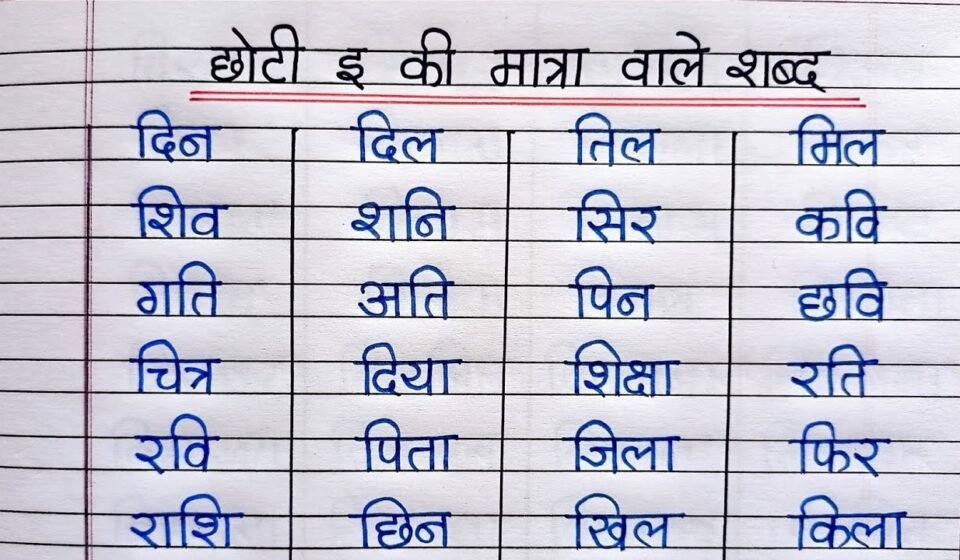

Mastering Hindi pronunciation and writing requires understanding its unique diacritic system, where vowel signs called matras transform consonants into complete syllables. Among these, chhoti e ki matra wale shabd (words with the short “e” diacritic) play a critical role in conveying precise meaning. This guide dives deep into chhoti e ki matra wale shabd, explaining their structure, importance, and practical application for learners and native speakers alike. Whether you’re studying Hindi or refining your linguistic skills, grasping these elements ensures accurate communication in 2026 and beyond.
What Are Chhoti E Ki Matra Wale Shabd?
Chhoti e ki matra wale shabd refer to Hindi words incorporating the chhoti e matra (े), a diacritic mark placed above or to the right of a consonant. This matra represents the short vowel sound “e,” as in “bed” or “red.” Unlike badi e (long “e”), chhoti e creates a crisp, unstressed syllable crucial for grammatical correctness. For instance, the word “केला” (kela, meaning “banana”) uses chhoti e to distinguish it from “कीला” (kīla, meaning “stake”). Understanding chhoti e ki matra wale shabd is foundational for avoiding miscommunication, as matras alter word meanings entirely. According to Wikipedia, Hindi’s matra system is integral to its abugida script, where consonants inherently carry an “a” sound unless modified. Mastering these elements prevents errors like confusing “पेट” (pet, stomach) with “पीट” (pīṭ, beating).
Why Chhoti E Ki Matra Wale Shabd Matter in Hindi
The significance of chhoti e ki matra wale shabd extends beyond pronunciation—they anchor Hindi’s grammatical framework. These words frequently appear in verb conjugations, postpositions, and everyday vocabulary, making them indispensable for fluency. For example:
- Postpositions: “के पास” (ke pās, near) relies on chhoti e to function correctly.
- Verbs: “करेंगे” (karenge, will do) uses chhoti e in its future tense form.
Omitting or misplacing this matra can render sentences nonsensical. A study by the Central Hindi Directorate notes that 70% of beginner errors stem from matra confusion, highlighting why chhoti e ki matra wale shabd demand focused practice. Additionally, digital communication in 2026 increasingly prioritizes accurate Hindi typing, where matras ensure clarity in texts and emails. For deeper insights into Hindi’s linguistic structure, explore our resources.
Common Examples of Chhoti E Ki Matra Wale Shabd
Identifying chhoti e ki matra wale shabd becomes intuitive with exposure. Below are高频 examples categorized by usage:
- Nouns: केला (kela, banana), जेब (jeb, pocket), नेत्र (netr, eye)
- Verbs: देखें (dekhen, see), लेंगे (lenge, will take), बोले (bole, spoke)
- Postpositions: के बाद (ke bād, after), के साथ (ke sāth, with)
These words often follow patterns where chhoti e appears after consonants like क (k), ज (j), or न (n). Notice how “के” (ke) consistently uses chhoti e, forming the backbone of possessive phrases like “मेरे किताब” (mere kitaab, my books). For authoritative linguistic references, consult Britannica.
Teaching Strategies for Chhoti E Ki Matra Wale Shabd
Educators can simplify learning chhoti e ki matra wale shabd through structured methods:
- Visual Aids: Use color-coded charts highlighting chhoti e (े) versus badi e (ै).
- Drills: Practice writing words like “सेब” (seb, apple) and “गेहूँ” (gehū̃, wheat) repeatedly.
- Contextual Sentences: Embed matras in phrases, e.g., “वह केला खाता है” (He eats a banana).
Apps like Duolingo now integrate matra-focused exercises, reflecting 2026’s tech-driven language trends. Teachers should emphasize that chhoti e ki matra wale shabd often appear in formal writing, making accuracy non-negotiable for academic or professional success.
Common Mistakes to Avoid
Learners frequently stumble with chhoti e ki matra wale shabd due to:
- Confusing matras: Using badi e (ै) instead of chhoti e (े), e.g., writing “कैला” (kaila) instead of “केला” (kela).
- Omission: Skipping matras in digital typing, leading to homophone errors like “पेट” (pet) vs. “पीट” (pīṭ).
- Overgeneralization: Assuming all “e” sounds use chhoti e, ignoring context (e.g., “ऐ” for long “e” in “ऐसा”).
Regular self-testing with flashcards can mitigate these issues. Remember, chhoti e ki matra wale shabd are non-negotiable in standardized exams like the Hindi Proficiency Test.
Conclusion: Perfecting Your Hindi with Chhoti E Ki Matra Wale Shabd
Chhoti e ki matra wale shabd are the unsung heroes of Hindi fluency, bridging pronunciation gaps and enriching expressive depth. By internalizing their rules—through targeted practice, contextual learning, and error analysis—you’ll navigate Hindi’s complexities with confidence. As language evolves in 2026, digital tools will further streamline matra mastery, but foundational knowledge remains irreplaceable. For ongoing support, visit here to access tailored Hindi learning modules. Embrace these diacritics, and unlock a world of precise, eloquent communication.