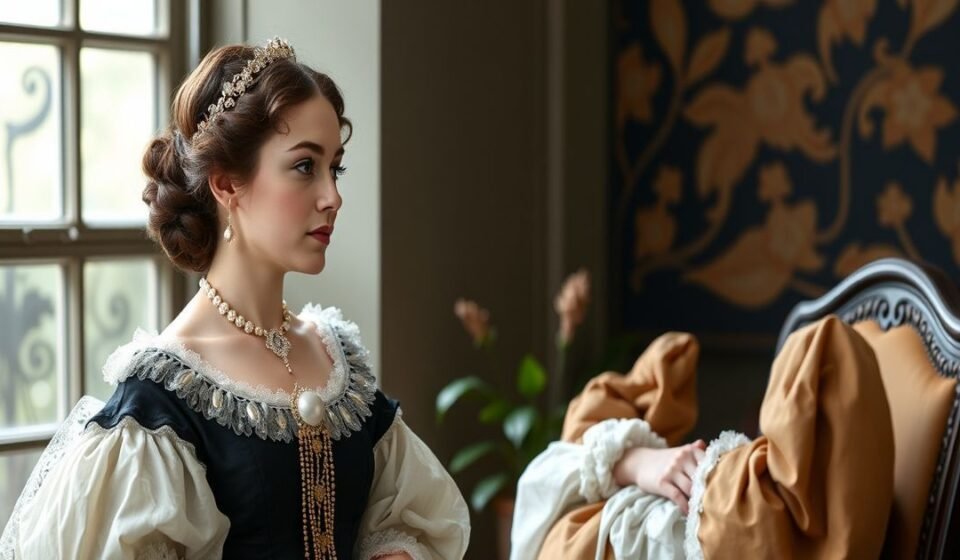

Introduction: The Woman Behind the Duke
In the glittering yet treacherous world of 18th century British high society, few figures wielded influence as subtly yet effectively as Elizabeth Mary Wilhelmina Bentinck. Born into the influential Cavendish family and later becoming Duchess of Portland through marriage, she navigated the complex corridors of power during a transformative era in British history. While her husband William Bentinck, the 2nd Duke of Portland, occupied prominent political positions, it was Elizabeth who mastered the art of behind-the-scenes maneuvering that shaped parliamentary outcomes and royal favor. Her story challenges modern perceptions of women’s roles in historical politics, revealing a figure who transformed societal constraints into strategic advantages. As we explore the life of Elizabeth Mary Wilhelmina Bentinck, we uncover not just a biographical account but a masterclass in political influence operating within the rigid structures of Georgian England. Her legacy offers invaluable insights into how power truly functioned beyond the official corridors of Westminster.
Early Life and Formative Influences
Elizabeth Mary Cavendish entered the world on 27 March 1739, daughter of William Cavendish, 4th Duke of Devonshire, and Lady Charlotte Boyle. This lineage placed her at the epicenter of British aristocracy from birth, with connections spanning royalty, politics, and intellectual circles. Her upbringing at Chatsworth House—one of England’s grandest estates—exposed her to sophisticated political discussions and social strategies from an early age. The Cavendish family’s prominence meant Elizabeth received exceptional education for a woman of her time, studying literature, languages, and political theory alongside traditional feminine accomplishments.
Her marriage in 1766 to William Bentinck, then Marquess of Titchfield and heir to the Portland dukedom, was a strategic alliance between two of Britain’s most powerful families. This union elevated her status significantly when William inherited the dukedom in 1785. The Bentinck family seat at Welbeck Abbey became her primary residence, where she cultivated an environment blending intellectual rigor with political networking. Elizabeth’s early experiences taught her that influence in Georgian society often resided not in official titles but in carefully constructed relationships and discreet counsel. Her ability to navigate complex familial alliances—particularly through her connections to the Prince of Wales (later George IV)—would later define her political significance. According to Wikipedia, her correspondence reveals a woman deeply engaged in the political machinations of her era, far beyond the domestic sphere expected of aristocratic women.
Key aspects of her formative environment included:
- Access to elite education uncommon for women, fostering political acumen
- Strategic family alliances connecting Cavendish and Bentinck power networks
- Exposure to high-stakes politics through her father’s role as Prime Minister (1756-1757)
- Mentorship from influential figures including her formidable mother-in-law, Margaret Bentinck
Political Mastery and Social Strategy
Elizabeth Mary Wilhelmina Bentinck’s true historical significance lies in her extraordinary political influence during Britain’s turbulent late 18th century. While her husband served as Prime Minister twice (1783 and 1807-1809), contemporary accounts and letters suggest Elizabeth was the strategic mind behind many of his political decisions. She mastered the art of “invisible governance,” operating through salons, correspondence, and carefully managed social gatherings at Welbeck Abbey and their London residence. Her influence extended to key political appointments, parliamentary maneuvers, and even royal favor—particularly with the Prince Regent, whom she cultivated through shared interests in art and architecture.
Her political strategy followed a precise methodology that maximized impact within societal constraints:
- Building intellectual salons where politicians, writers, and thinkers exchanged ideas under her discreet guidance
- Leveraging correspondence networks to shape opinions across party lines through carefully worded letters
- Hosting strategic gatherings that facilitated backchannel negotiations between rival factions
- Cultivating royal relationships through patronage of the arts and shared cultural interests
Elizabeth’s most notable political achievement was her role in stabilizing the Portland ministry during the volatile period following the French Revolution. She skillfully mediated between conservative and reformist factions, using her connections to prevent governmental collapse on multiple occasions. Her ability to maintain relationships with both Whigs and Tories demonstrated remarkable political dexterity. For those interested in historical political strategies, explore our resources on how power operated beyond official channels in Georgian Britain. As historian Amanda Foreman notes, Elizabeth operated in “the shadow world where influence was traded like currency,” making her one of the most effective political operators of her generation despite lacking formal authority.
Legacy and Historical Reassessment
The legacy of Elizabeth Mary Wilhelmina Bentinck has undergone significant reevaluation in modern historiography. Once dismissed as merely a society hostess, contemporary scholars now recognize her as a pivotal political actor whose contributions shaped British governance during a critical period. Her papers, housed in the Portland Collection at the University of Nottingham, reveal extensive correspondence with figures like Charles James Fox, Edmund Burke, and the Prince Regent—evidence of her central role in political decision-making. This archival material demonstrates how she influenced everything from cabinet appointments to policy positions through what historians term “soft power.”
Modern assessments highlight several enduring aspects of her legacy:
- Pioneering female political agency within patriarchal structures, setting precedents for future generations
- Architect of cross-party dialogue during an era of intense political polarization
- Cultural patronage that supported artists and thinkers, enriching British intellectual life
- Diplomatic mediation that helped navigate Britain through revolutionary turmoil in Europe
The reassessment of Elizabeth’s role reflects broader trends in historical scholarship that seek to recover women’s contributions to political history. Where earlier narratives focused exclusively on male leaders, contemporary historians now examine how influence operated through informal networks—precisely the domain where Elizabeth excelled. Her story challenges the notion that political power in the 18th century was solely the preserve of titled men. As we continue to uncover these hidden histories, figures like Elizabeth Mary Wilhelmina Bentinck remind us that political change often emerges from unexpected quarters. For deeper insights into historical reassessments, learn more on our site about how modern scholarship is reshaping our understanding of power dynamics.
Conclusion: Enduring Lessons from a Political Strategist
Elizabeth Mary Wilhelmina Bentinck’s life offers timeless lessons about influence, strategy, and the power of operating effectively within constraints. Her ability to shape British politics without holding office demonstrates that formal authority is not the only path to meaningful impact. In an era when women’s political participation was severely restricted, she mastered the art of indirect influence through relationship-building, intellectual engagement, and strategic communication—a model still relevant in today’s complex political landscapes. Her legacy reminds us that historical narratives often overlook crucial contributors who work behind the scenes, making her story not just a fascinating biographical account but a vital correction to our understanding of power.
As we reflect on her achievements, we recognize Elizabeth Mary Wilhelmina Bentinck as far more than a historical footnote. She was a political strategist who navigated the treacherous waters of Georgian politics with remarkable skill, leaving an indelible mark on British governance. Her story encourages us to look beyond official titles when seeking sources of influence and to value the subtle arts of persuasion and connection. For readers inspired by stories of overlooked historical figures, we invite you to discover more compelling narratives that reshape our understanding of the past. In reclaiming figures like Elizabeth, we gain not just historical knowledge but valuable perspectives on how change truly happens in any era.